Category
What Are All-Inclusive Packages What They Include, Costs, and Benefits
An all-inclusive package is a comprehensive travel option that simplifies the vacation planning process by bundling various services into a single pricing structure. This approach allows travelers to understand costs clearly and aids in itinerary planning. These offerings typically encompass accommodations, meals, beverages, and activities; however, specific inclusions can vary significantly based on the service provider, property type, fare, and destination. Recognizing these nuances is essential for consumers. Making informed decisions regarding all-inclusive packages can dramatically enhance the travel experience and facilitate adherence to budgets. This guide aims to demystify all-inclusive packages, empowering you to select options that best align with your needs and preferences.

What is Usually Included and Excluded?
Inclusions
When travelers opt for all-inclusive packages, they can anticipate an impressive range of features that enrich their vacation experiences. While offerings may differ, key components usually include:
- Lodging Options: Accommodations often vary from basic rooms to opulent luxury suites, equipped with amenities such as high-speed Wi-Fi, minibars, and in-room entertainment systems.
- Meals: Packages typically encompass various meal formats:
- Buffet: A diverse spread of dishes available at designated times, providing flexibility for guests.
- À la Carte: Guests can select meals from a menu, frequently featuring gourmet options.
- Beverages: Guests generally enjoy both alcoholic options (such as wine, beer, and cocktails) and non-alcoholic drinks (including soft drinks and fresh juices).
- Activities: Guests have access to numerous activities, ranging from water sports like snorkeling and kayaking to fitness sessions such as yoga and aerobics.
- Entertainment: Live shows, themed nights, and access to bars and nightclubs are often included as entertainment options.
Exclusions
However, travelers need to recognize common exclusions that may apply to their all-inclusive packages:
- Premium Dining: High-end restaurants and special dining experiences often entail additional costs.
- Excursions: Outing or tours away from the property may require separate payments, impacting the overall vacation budget.
- Spa Services: Spa treatments such as massages and beauty services are rarely included and may involve extra fees.
- Travel Insurance: This essential coverage is typically not part of the package, necessitating separate purchases for travelers’ peace of mind.
- Extra Fees: Guests should stay vigilant regarding potential resort fees and tipping expectations, which can unexpectedly add to vacation costs.
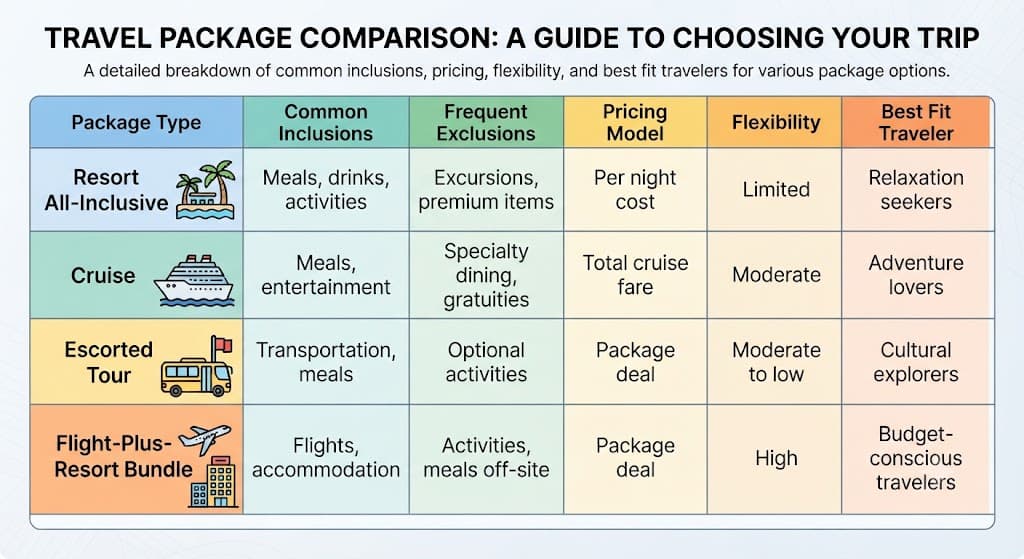
All-Inclusive Package-Type Comparison
Different Types of Packages
When exploring all-inclusive travel options, there are various types tailored to meet diverse preferences and needs:
- Resort All-Inclusive Packages: Focused on a single accommodation, these packages allow for unlimited food, beverages, and entertainment at the resort. Perfect for those seeking relaxation, activities often encompass water sports, themed dining nights, and live performances.
- Cruise Packages: Providing a unique floating hotel experience, cruise packages typically include overnight accommodations, meals, onboard activities, and occasional excursions. They enable travelers to explore multiple destinations while enjoying onboard amenities and services.
- Escorted Tours: These packages deliver a guided travel experience through various locations that include accommodations, transportation, and many meals. Ideal for those who prefer to explore with an experienced guide, escorted tours frequently highlight cultural exploration.
- Flight-Plus-Resort Bundles: Bundling airfare with accommodations, these packages usually provide savings compared to booking each separately. While flexibility can vary, they often cover just the essentials and allow for personalized adventures.
How Pricing and Restrictions Work
All-inclusive packages often showcase an attractive pricing structure in contrast to traditional pay-as-you-go models. With an all-inclusive approach, consumers usually pay a flat rate per night or per person, encompassing meals, lodging, and a wide array of activities. This straightforward pricing framework significantly streamlines the budgeting process, as travelers can identify their total expenses upfront, effectively reducing unforeseen costs.
In contrast, pay-as-you-go methods may result in fluctuating expenses, particularly for dining and recreational activities that are not included. Although these methods allow for flexibility, they can also culminate in increased overall costs if not carefully managed.
Common restrictions associated with all-inclusive packages frequently involve limitations on dining times or the types of activities offered. For instance, some resorts might reserve premium dining options or particular excursions for an extra fee, which can impact how valuable the package feels. Travelers should fully comprehend these restrictions—such as reservation requirements and operational hours—to optimize their experiences effectively.
By maintaining an understanding of pricing structures and restrictions, travelers can select packages that best serve their interests, ensuring maximum value for their financial investment.
How to Calculate the Value of an All-Inclusive Package
To determine whether an all-inclusive package offers good value, compare the package price with the estimated cost of booking the same services separately.
A simple formula is:
Potential Savings = Separate Booking Cost − All-Inclusive Package Price
If the result is positive, the package may provide better value. If the result is negative, booking individual components separately could be more affordable.
Who Are All-Inclusive Packages Best For?
Ideal Travelers
All-inclusive packages are particularly beneficial for families, groups, and budget-focused travelers. Families can relish a stress-free getaway, taking advantage of child-friendly amenities and diverse activities tailored for all ages. Groups, whether composed of friends or extended family, find that these packages foster bonding through collective activities without the added worry of unexpected expenses. For budget-conscious vacationers, the upfront cost simplifies financial forecasting, ensuring they can enjoy leisure activities without incurring hidden expenses.
Potential Downsides
On the other hand, solo travelers or those who value spontaneity might not see the same advantages with all-inclusive packages. Solo travelers often pursue unique and secluded experiences that structured environments may restrict. Additionally, those inclined to explore spontaneously may feel confined by predetermined itineraries and scheduled events, limiting their opportunity to discover hidden gems beyond the resort boundaries.
Common Surprises and Contract Terms
When securing all-inclusive packages, travelers may encounter unexpected fees and restricted access to amenities. For instance, some resorts might impose charges for premium dining establishments or spa treatments, despite claims of a comprehensive package. One vacationer, feeling misled, discovered that the claimed beach cabanas had hefty hourly rental fees.
To navigate these surprises, it is crucial to meticulously review contract terms before finalizing your reservation. Scrutinize the inclusivity of meals, beverages, and activities. Ensure you verify specifics about excluded services and cancellation policies. A clear understanding of your selected package can avert unpleasant surprises and unplanned expenses, contributing to a more enjoyable travel experience. Always inquire about additional fees or restrictions front and center to ensure you capture the full potential of your all-inclusive getaway.
All-Inclusive Package Booking Checklist: What to Check Before You Book
To prepare effectively for all-inclusive vacation packages, consider the following checklist items:
- Room Category: Identify the distinction between upgraded, standard, or suite accommodations, which will affect overall experience and amenities.
- Restaurant Access: Confirm if reservations are necessary for specialized restaurants and which are covered in the package.
- Drink Tiers: Ascertain whether top-shelf liquors and premium beverages are part of the offer or if extra charges apply.
- Activity Limits: Investigate any restrictions on activities like excursions, spa services, or water sports to clarify what’s included.
- Potential Resort Fees: Inquire about additional costs such as local taxes and service charges that may not be included in the package price.
- Child Policies: Review age restrictions for children's programs and whether your children can stay for free.
- Transfer Arrangements: Verify that transportation to and from the resort is included to avoid unforeseen costs.
- Cancellation Policies: Understand the conditions surrounding cancellation or modification of your reservation.
- Consumer Protection: Familiarize yourself with insurance options and protections available concerning any disruptions in your travel plans.
Using this checklist will help ensure a smoother travel experience and maximize the value of your all-inclusive package.
Choosing the Right All-Inclusive Package for Your Vacation
All-inclusive packages can simplify vacation planning by combining accommodation, meals, and selected activities into one upfront price. They can provide better cost predictability and convenience, especially for travelers who prefer a relaxing resort experience or want to avoid managing multiple bookings.
However, not every package offers the same value. Before booking, review what is included, check for additional fees, and consider whether the available dining options, activities, and location match your travel preferences. By comparing different packages carefully, travelers can choose an option that fits their budget, expectations, and vacation style.
Was this helpful? Share your thoughts
- Learned practical methods
- Solved my questions
- Inspired new ideas
Editor's Picks
-
![Dubai Desert Safari With Dinner: Full Review 2025]() Dubai Desert Safari With Dinner: Full Review 2025
Dubai Desert Safari With Dinner: Full Review 2025 -
Dubai's desert landscape draws millions each year, blending adventure with cultural immersion. For those seeking an unforgettable evening, a Dubai desert safari with dinner stands out as a top activity. This experience combines thrilling dune drives, traditional entertainment, and a starlit meal in the vast sands.
Explore More

-
![Hiking Mount Fuji In 2025: Guided Vs Unguided Trips]() Hiking Mount Fuji In 2025: Guided Vs Unguided Trips
Hiking Mount Fuji In 2025: Guided Vs Unguided Trips -
Mount Fuji stands as a beacon of natural wonder, drawing adventurers from around the globe to its snow-capped peak. This majestic volcano, with its symmetrical cone, has inspired artists and hikers for centuries. As 2025 approaches, new regulations aim to preserve its beauty while ensuring safer ascents. This guide breaks down the choices between guided and unguided hikes, equipping readers with all the details needed to plan a memorable journey up Japan's iconic summit.
Explore More

Don't Miss




Share This Article